
Agentic coding: How we build software at Vicoland without writing code (ourselves)
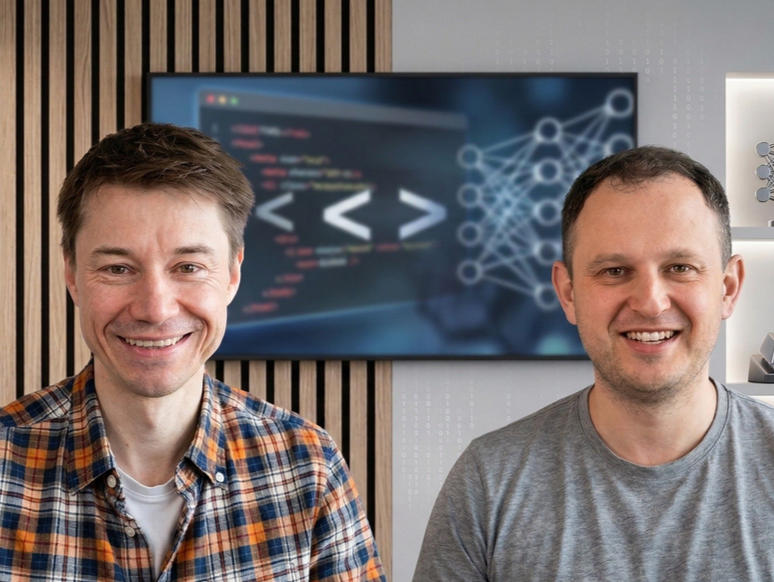
Two years ago, Josef Nevoral would have said his team consists of frontend developers, backend developers, and QA engineers. Today, Vicoland's CTO says: "We have builders." In the first episode of the interview series "Interviews with technology leaders" on the YouTube channel "AI with Michal Juhas," he explains what has changed - and why there is no going back.
Describing tasks instead of typing code
Josef's engineering team is about ten people. They build the Vicoland platform - the system through which Vicos (well-coordinated teams of freelance experts) deliver projects as lean service providers: from AI-powered proposal creation to automated contracts to payouts for every team member. Complex enough to traditionally require many more developers. Yet the team barely writes code manually anymore. Instead, they work with AI agents - tools like Cursor and Claude, describing in natural language what needs to be built.
Josef uses an everyday analogy: If you need a shelf, you can go to your workshop, cut the wood, sand it, varnish it, and assemble it yourself. Or you walk into a furniture store and buy it fully assembled. Agentic coding is the furniture store of software development - you describe what you need, and the AI delivers the result. The craftsmanship is no longer in the sawing and screwing, but in knowing which shelf belongs on which wall.
The surprise: resistance came from the best
What Josef did not expect: the most experienced developers on the team had the hardest time with the shift. Anyone who has spent years perfecting their own coding routines does not easily hand over control of every single command - even when the result is right. It is the difference between "I built it myself" and "I made sure it was built right." Developers with a prototyping background, on the other hand, adopted the tools immediately - speed had always mattered more to them than the path to get there.
The solution was structured. Josef's team now defines clear guardrails: configuration files and context rules that tell the AI exactly what the finished code should look like. The result is output that meets the team's quality standards - not through micromanagement, but through well-defined boundaries.
From specialist to builder
The old role boundaries are dissolving. At Vicoland, even product managers and designers now work on the codebase - because the technical barriers to entry are lower than ever. That does not mean anyone can tinker with production code unchecked. Code reviews, automated tests, and clearly defined deployment processes remain integral to the development workflow. What changes is the role itself: the "builder" emerges - someone who solves problems end-to-end, supported by AI agents, embedded in secure processes. This principle is also reflected in the platform itself. On the Vicoland platform, AI agents work as digital team members alongside human experts in briefings, proposal creation, and project organisation. No overhead, no bench. This applies to the Vicos working through the platform just as much as to the team building it.
Not an optional upgrade
Josef compares the shift to the invention of the automobile: when the car arrived, the horse became obsolete as a means of transport. Yet there are still riders today - but as a hobby, not as a way to get to work. "There are still people riding horses, but nobody rides a horse to work, right? It's a hobby. That will be the same in software engineering." Manual coding will not disappear. But it will become a pastime - no longer the tool you use to build products.
His advice to other CTOs: don't start with your team, start with yourself. Automate a small, annoying everyday problem. At a cost of around 100 dollars per developer per month for AI tokens, the barrier to entry is low, while the leap in productivity is enormous.
Watch the full episode here: From Coding to Prompting and T...
Learn more about Vicoland: https://www.vicoland.com